
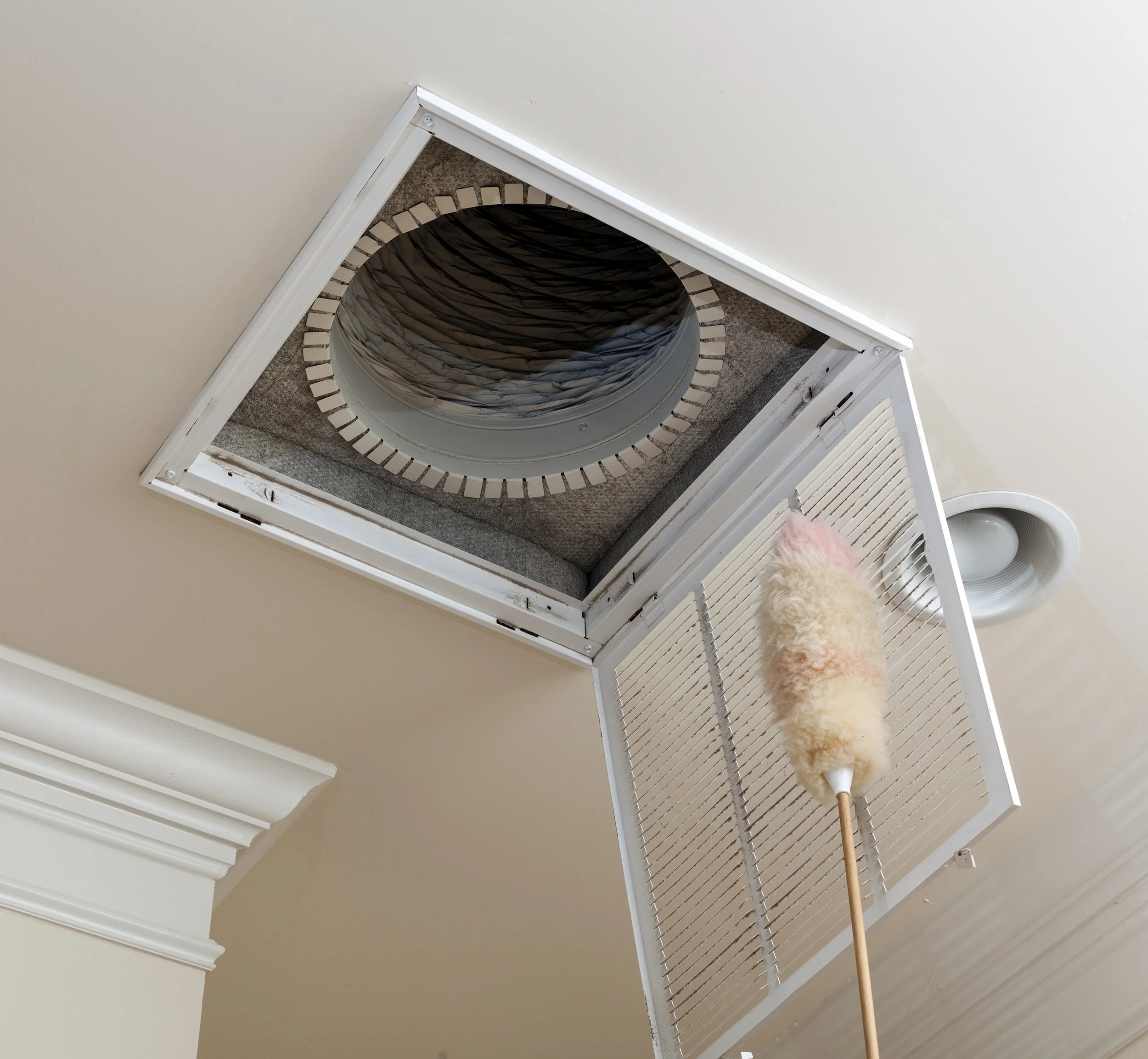
It's 90°F outside and your thermostat is set to 72°F — but the upstairs bedrooms feel like a sauna. The basement is frigid. The living room is tolerable. Sound familiar? This is one of the most common complaints we hear from Philadelphia homeowners every July and August, and the fix almost never involves buying a bigger AC unit.
The real culprit is poor airflow. Your central air system was designed to distribute conditioned air evenly throughout your home — but over time (or due to flawed original installation), that distribution breaks down. Leaky ducts, blocked registers, dirty filters, and pressure imbalances all conspire to leave certain rooms roasting while others are overcooled. Here's how to diagnose and fix airflow problems room by room.
Why Airflow Matters More Than You Think
Your AC system is only as effective as its ability to circulate air. When airflow is restricted or unbalanced, several problems cascade:
- Hot and cold spots — certain rooms never reach the thermostat's set temperature
- Higher energy bills — your system runs longer cycles trying to satisfy a thermostat that never gets satisfied
- Premature equipment wear — restricted airflow causes the evaporator coil to freeze and the compressor to work under stress
- Humidity problems — Philadelphia summers average 65–75% relative humidity; poor airflow means your AC can't dehumidify properly, leaving rooms feeling muggy even when they're technically at the right temperature
Fixing airflow is often the highest-ROI HVAC improvement a homeowner can make — and many fixes cost little to nothing.
Step 1: Start With the Filter
This sounds basic, but a clogged air filter is the single most common cause of airflow problems we find on service calls. A dirty 1-inch filter can reduce airflow by 20–40%, which ripples through the entire system. In July, when your AC runs nearly continuously, filters load up fast — especially if you have pets or live near a high-traffic road (looking at you, anywhere near I-76 or Route 30).
If you haven't changed your filter in the last 30–60 days during peak summer, do it now. Use a MERV 8–11 filter for most homes — high enough to capture meaningful allergens, but not so restrictive that it chokes your blower. Avoid MERV 13+ unless your system was specifically designed for high-restriction filters; they do more harm than good in most residential systems.
Step 2: Check Every Supply and Return Register
Walk through your home and inspect every vent. Look for:
- Blocked supply registers — furniture, rugs, curtains, and boxes are frequent offenders. A couch pushed over a floor vent can gut airflow in an entire zone.
- Closed registers — a common myth is that closing registers in unused rooms saves energy. It doesn't. It increases static pressure in the duct system and forces air out through duct leaks elsewhere.
- Dirty registers — dust-caked grilles restrict airflow and push particulates into the room. Pull them off and wash them in your sink.
- Missing or undersized return air vents — every room that has a supply vent should also have a clear path for air to return to the air handler. Homes with too few return vents — common in older Philadelphia row homes — develop positive pressure in rooms, which pushes supply air back out rather than circulating it.
Step 3: Inspect Your Ductwork for Leaks
The EPA estimates that 20–30% of the air moving through a typical duct system is lost to leaks — meaning nearly a third of what you're paying to cool never reaches the living space. In older Philadelphia homes with ductwork installed decades ago, that number can be even higher. Ducts run through unconditioned attic and basement spaces are especially prone to losing cooled air before it arrives at the register.
Signs of significant duct leakage include:
- Rooms that are consistently 5°F or more off the thermostat setting
- High energy bills that don't match your system's rated efficiency
- Visible gaps or disconnections at duct joints (check basement and attic)
- Dusty rooms that seem to get dirty faster than the rest of the house
- An AC system that runs constantly but never fully satisfies
A GenServ Pro technician can perform a duct pressure test to quantify exactly how much leakage your system has and identify where the leaks are concentrated. Sealing those leaks — either with mastic sealant or metal tape at joints — is one of the most impactful home comfort improvements you can make.
Row Homes & Twins: A Special Airflow Challenge
Philadelphia's iconic row homes and twin houses were built before central air conditioning existed. Retrofitting HVAC into these narrow, multi-story structures often results in undersized returns, runs that are too long for the equipment, and attic ductwork that turns into an oven in July. If you live in a row home or twin and have persistent hot upper floors, the issue is almost certainly a combination of duct design and insulation — not your equipment. A Manual J load calculation and duct design assessment from a licensed HVAC contractor can reframe the whole problem.
Step 4: Balance Airflow Between Floors
Hot air rises. This isn't just a saying — it's physics, and it makes upper floors consistently harder to cool than lower floors. A few strategies to rebalance:
- Adjust dampers in the ductwork — if your system has manual dampers (metal levers on duct branches), partially close the ones serving lower floors in summer to push more airflow upstairs. Reverse in winter for heat.
- Use ceiling fans correctly — in summer, fans should spin counter-clockwise (when viewed from below) to create a downdraft and wind-chill effect. This lets you feel comfortable at a thermostat setting 4°F higher without sacrificing comfort.
- Move the thermostat sensor — if your thermostat is on the first floor, it satisfies and shuts off before the second floor is adequately cooled. A wireless remote sensor placed upstairs can average the two readings and keep the system running until both floors are comfortable.
- Consider a zoned system or ductless mini-split — for homes with severe floor-to-floor imbalances, adding a ductless mini-split to the upper level is often the most elegant solution. It provides independent, targeted cooling exactly where it's needed without stressing the existing duct system.
Step 5: Seal the Envelope (The Hidden Airflow Problem)
Your HVAC system conditions air inside your home. But if your building envelope is leaky — gaps around windows, doors, recessed lights, plumbing penetrations, attic hatches — you're constantly conditioning outside air that sneaks in. On a humid Philadelphia July afternoon, every cubic foot of outside air that infiltrates your home is 90°F and 70% relative humidity that your AC has to deal with.
Air sealing is unglamorous but highly effective. Focus on the attic floor (the most common leakage point), around window frames, at the sill plate where your home meets the foundation, and around any penetrations for pipes or wires. Weatherstripping on doors and window seals can also make a meaningful difference without requiring professional help.
Step 6: Have Your Blower Motor Inspected
The blower motor is the heart of your air distribution system. If it's running at reduced speed — due to a failing capacitor, dirty blower wheel, or motor wear — your entire duct system is starved for airflow no matter how well-designed it is. A technician can measure actual airflow (in CFM) against your system's design spec and identify whether the blower is the bottleneck. This is part of a comprehensive GenServ Pro HVAC tune-up and often catches problems before they become failures.
When to Call a Professional
The DIY steps above — changing filters, clearing registers, ceiling fan adjustments — can be done today and make a noticeable difference by tonight. But if you've done all of that and still have hot rooms, persistent humidity problems, or an AC that runs nonstop, it's time for a professional assessment. The fix may be as simple as damper adjustments or as involved as duct redesign, but you won't know until someone measures what's actually happening inside your system.
GenServ Pro serves Philadelphia, Delaware County, the Main Line, and surrounding communities. Our technicians are licensed, 4.9-star rated, and carry the tools to diagnose airflow issues on the spot — not just guess. We'll tell you exactly what's happening and give you honest options at transparent prices.
Tired of Hot, Stuffy Rooms? Let's Fix That.
GenServ Pro's HVAC technicians serve Philadelphia, the Main Line, and Delaware County. Call or schedule online and we'll diagnose your airflow problem — no guessing, no upselling.